Introduction
About 1 in 3 adults don’t get enough sleep, according to the CDC—and a lot of those folks (me included, at one point) end up with a whole drawer full of random “nighttime” pills and powders that don’t really work together.
That’s where sleep stack supplements come in. Instead of throwing every natural sleep aid at the wall and hoping something sticks, a sleep stack is a planned combo of a few targeted supplements that support relaxation, sleep onset, and sleep quality in a smart way.
Over the years, I’ve tested different sleep stacks on myself first, then with clients, and I’ve seen the right combination turn those “staring at the ceiling at 2 a.m.” nights into pretty reliable, restorative sleep. I’ve also seen messy stacks backfire—grogginess, weird dreams, or just wasting money—so I’ve made plenty of mistakes so you don’t have to.
In this guide I’ll walk you through what a sleep stack actually is, how these supplements work in your body, common ingredients, how to build a safe stack, and some simple templates for things like anxiety-driven insomnia, shift work, and jet lag. I’ll keep it plain language, share what’s worked (and hasn’t) for me and clients, and flag where research is strong vs. where we’re still guessing a bit.
Most important: this is about supporting your natural circadian rhythm and deep sleep, not knocking yourself out with a chemical hammer. Small doses, thoughtful combinations, and solid habits—those are the real power trio.
What Are Sleep Stack Supplements? A Simple Overview
What a Sleep Stack Actually Is
When I say “sleep stack,” I mean a planned combo of 2–5 sleep-related supplements that you take together at night for a specific goal. That might be falling asleep faster, staying asleep, or waking up without that “hit by a truck” feeling.
Instead of a single over the counter sleep supplement, a sleep stack uses synergy: one ingredient calms your nervous system, another supports melatonin, another relaxes muscles, and so on. It’s like building a small team instead of hiring one overworked employee to do every job.
How a Sleep Stack Differs From Just One Sleep Aid
When I first tried melatonin years ago, I figured, “More is better.” Bad idea. A big dose knocked me out but also gave me 3 a.m. wakeups and groggy mornings.
What I eventually learned is that a smart sleep supplement stack guide uses smaller doses of multiple ingredients to hit different pathways: GABA and serotonin for calm, magnesium for tension, circadian rhythm supplements like low-dose melatonin for timing. Less brute force, more gentle nudge.
Forms and Who Might Benefit
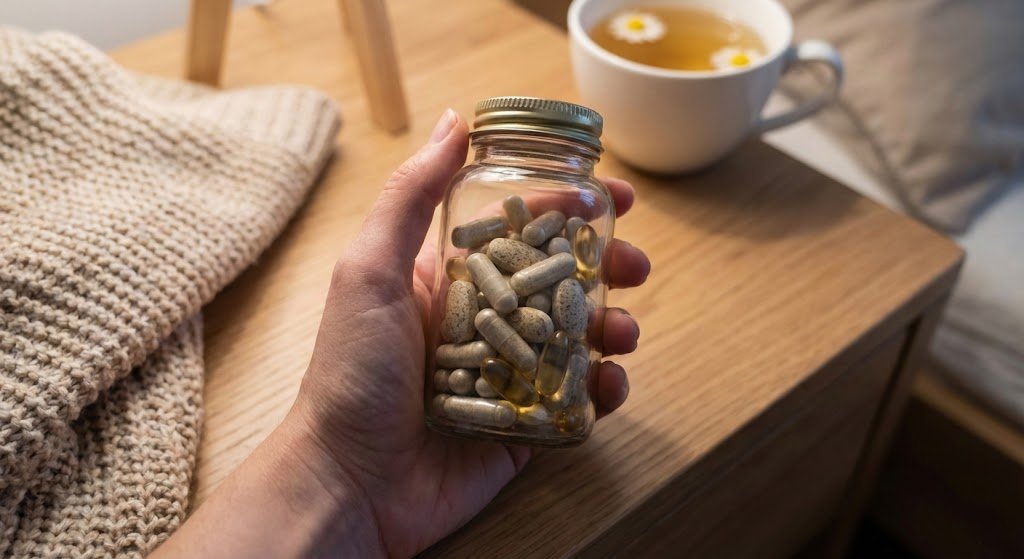
Sleep stack supplements show up as capsules, powders, gummies, sleep powder supplements, even sleep tea blends. You can buy pre-made “sleep support gummies” or custom-build your own stack from individual products.
They can be especially helpful if you’re “tired but wired,” a light sleeper, waking up a lot at night, dealing with jet lag, or trying to optimize sleep quality and deep sleep support without prescription meds. They’re not magic, but paired with good sleep hygiene tips, they can be a serious upgrade.
How Sleep Stack Supplements Work in the Body
Quick Sleep Biology in Plain English
Your body runs on a circadian rhythm—basically an internal 24-hour clock that tells you when to be alert and when to wind down. As the day goes on, sleep pressure builds up (thanks to a chemical called adenosine), and at night your brain releases melatonin to signal “hey, it’s bedtime.”
On top of that, your nervous system has two main modes: “fight or flight” and “rest and digest.” If stress and screens keep you stuck in fight-or-flight mode at 10 p.m., it doesn’t matter how tired you are—you’ll feel wired.
What Supplements Are Trying to Do
Most natural sleep aids and sleep stack supplements work by doing one or more of these things:
- Calming the nervous system with neurotransmitters like GABA or serotonin support.
- Supporting melatonin production or timing for better sleep onset.
- Relaxing muscles and physical tension so your body can actually let go.
- Helping evening cortisol come down, which is huge for stress-related insomnia.
Some ingredients mostly help you fall asleep faster, others help you stay asleep and improve sleep architecture (your mix of light, deep, and REM sleep). A good sleep stack for deep sleep usually hits both.
Why Combining Ingredients Can Work Better
One thing I learned the hard way: huge doses of one strong sedative-type supplement often feel good for a couple nights, then start causing side effects or just stop working. That’s when people panic and keep upping the dose.
A science backed sleep stack instead uses smaller doses of several gentle, non habit forming sleep aids. You get enough effect to calm your brain and body, but not so much that you clobber your system and feel hungover the next day.
Core Ingredients Commonly Used in Sleep Stack Supplements
Melatonin Sleep Support
Melatonin is a hormone your brain naturally makes at night, and it’s great for circadian rhythm support, jet lag sleep supplements, and shift work sleep support. But most people way overdose it.
For adults, low dose melatonin—often 0.3–1 mg—can work better than the big 5–10 mg pills you see everywhere. I once took 10 mg for a week and felt like I was walking through wet cement the next mornings, so I’m very pro microdose now.
Magnesium for Sleep
Magnesium is one of my favorite safe sleep supplements and honestly one of the best sleep supplements to start with. Magnesium glycinate sleep and magnesium threonate sleep are usually gentler on the gut, while magnesium citrate can be more laxative.
It helps relax muscles, supports the nervous system, and many people are a bit deficient. I usually take it 1–2 hours before bed as part of a nighttime magnesium routine and have clients start there before stacking anything heavy.
L-theanine Sleep Support
L-theanine is an amino acid from green tea that promotes calm focus without sedation. It’s awesome if your brain loves late-night “what if” thoughts.
I use it 30–60 minutes before bed when my mind won’t shut up, or pair it with an afternoon coffee to smooth out caffeine and sleep interaction so my evening isn’t jittery.
GABA Sleep Supplement
GABA is the main calming neurotransmitter. Some people feel a clear “ahh” effect from GABA sleep supplements, others not so much, probably because of how it crosses (or doesn’t cross) the blood-brain barrier.
I’ve had the best luck stacking GABA and L-theanine together in low doses, especially for folks with anxiety plus insomnia. It’s a nice gentle combo of calming supplements for anxiety and sleep.
Glycine for Deep Sleep
Glycine is a simple amino acid that can help lower core body temperature and support deeper sleep. It’s often taken as a slightly sweet powder in water 30–60 minutes before bed.
When I added glycine to my own sleep stack without melatonin, I noticed fewer mid-night awakenings and less tossing around. It’s one of those under-rated drug-free sleep solutions.
Valerian Root for Insomnia
Valerian root is a traditional herbal sleep remedy that seems to work partly through GABA support. It can be pretty strong for some people.
When I first tried it, I woke up feeling like I had a mild hangover, so now I only use it in small amounts and not every night. It’s one to treat with a bit of respect.
Passionflower Sleep Support
Passionflower is another herb that supports relaxation and can ease restlessness. It’s pretty common in sleep tea blends and tinctures.
I like it as part of an evening relaxation supplement routine—especially for folks who feel fidgety or keep checking their phone “one last time” in bed.
Chamomile Tea for Sleep
Chamomile is about as gentle as herbal sleep remedies get. It won’t usually knock you out, but it pairs really well with other non prescription sleep aids and bedtime rituals.
Honestly, half the magic is the warm mug telling your brain “we’re done for the day now.” I use it in almost every home sleep improvement plan I do with clients.
Ashwagandha for Sleep and Cortisol
Ashwagandha is an adaptogen that can help with stress and cortisol regulation. It’s more of an all-day stress relief sleep supplement than a knock-you-out herb.
Some people do great with it, others feel wired, so this is one to test cautiously. I’ve had a couple clients feel more alert at night on it, so we moved their dose to morning and that fixed it.
5-HTP and Tryptophan Sleep Aid
5-HTP and L-tryptophan both support the serotonin and melatonin pathway. They can be very helpful for some, but they’re not toys.
If you’re on antidepressants (SSRIs, SNRIs, etc.), these can increase the risk of serotonin syndrome, so they’re firmly in the “talk to your doctor first” category. I use them sparingly and usually not as a first-line option.
CBD for Sleep
CBD for sleep can help some people relax and reduce anxiety without the high of THC. Results are very individual and depend a lot on product quality.
I’ve seen it help folks with pain-related restless sleep, but I also see people overspend on fancy oils that don’t do much. If you try it, keep the rest of your sleep stack simple at first so you can tell what’s actually helping.
How to Build a Safe and Effective Sleep Stack
Start With the Boring Foundation
I know, nobody wants to hear this, but the best sleep stack starts with habits. If you’re pounding caffeine at 5 p.m., scrolling under bright blue light until midnight, and sleeping at random times, no supplement is going to fully fix that.
So first get the basics: earlier caffeine cut-off (usually before 2–3 p.m.), regular bedtime and wake time, dim lights in the evening, and some sort of wind-down routine. Then layer supplements on top for extra support.
Step-by-Step Stack Building
Here’s roughly the process I use with clients and with myself:
- Step 1: Start with ONE base supplement, usually magnesium or L-theanine.
- Step 2: Track your sleep for 7–14 nights using a simple diary or app.
- Step 3: If needed, add ONE more ingredient, like low dose melatonin or glycine.
- Step 4: Adjust timing—some people do better 60–90 minutes before bed, others right at lights-out.
I used to add three things at once because I was impatient. Then if I felt weird, I had no idea which supplement was the problem—so don’t do what I did.
Keep It Low and Simple
The goal is the minimum effective dose, not “I didn’t sleep great so I’ll just double everything.” High doses of melatonin or strong herbs stacked together can wreck your sleep architecture and leave you zombie-like.
Most adults do well with 2–4 ingredients max in a long term use of sleep supplements, not a dozen. Think calm, not coma.
Match the Stack to the Problem
Customize based on your main issue:
- Trouble falling asleep: Think L-theanine, magnesium, low dose melatonin.
- Staying asleep: Magnesium, glycine, calming herbs like chamomile or passionflower.
- Early morning waking: Often stress or cortisol—ashwagandha (if tolerated) and stress management help more than piling on sedatives.
And always, if you’re on meds, pregnant, or have chronic conditions, run your sleep stack plan by a healthcare provider. Supplement interactions with sleep meds are real, even with “natural” products.
Sample Sleep Stack Supplement Combinations for Common Issues
For Trouble Falling Asleep (“Tired but Wired”)
This was me for years—exhausted but buzzing at night. What’s helped most often is a gentle stack like this:
- Magnesium glycinate 1–2 hours before bed.
- L-theanine 30–60 minutes before bed.
- Optional: very low dose melatonin at lights-out if your timing is off.
Plus a strict “no email or social media” rule that last hour. Annoying but very effective.
For Staying Asleep / Frequent Awakenings
Night wakings can be brutal. I’ve seen good results from focusing more on deep sleep support than just knockout power.
- Magnesium in the evening for overall relaxation.
- Glycine in water 30–60 minutes before bed for deeper sleep.
- A calm pre-bed routine: light stretching or yoga + book, no bright screens.
For Stress and Anxiety-Driven Insomnia
When stress is the driver, daytime support matters just as much as nighttime. I learned this after trying to fix crazy work stress with only night pills—didn’t go well.
- Daytime: adaptogens for insomnia like ashwagandha (if approved by your provider).
- Evening: L-theanine or passionflower as calming supplements for anxiety and sleep.
- Chamomile tea for sleep as part of a nightly ritual—same time, same steps every night.
For Shift Workers or Jet Lag
Circadian chaos is its own beast. Here I focus on timing more than quantity.
- Melatonin timed to your target bedtime in the new schedule.
- Bright light at your “morning” and a really dark environment during your “night.”
- Gentle aids like magnesium and L-theanine, not heavy sedatives.
For Occasional Travel or Time Zone Changes
When I travel, I try to keep my sleep stack travel-friendly and simple. No giant powder tubs in the suitcase.
- Short-term melatonin according to the destination bedtime.
- Magnesium to help with muscle tension from flights and hotel beds.
- Maybe a small herbal combo capsule instead of multiple bottles.
Timing Your Sleep Stack: When and How to Take Supplements
Why Timing Matters So Much
I’ve watched people take melatonin with dinner at 6 p.m. and wonder why they feel weird by 8. Timing can matter just as much as what you’re taking.
A rough pattern that works for many adults looks like this:
- 2–3 hours before bed: Last caffeine, heavier meals done.
- 1–2 hours before bed: Magnesium, ashwagandha if using, relaxing herbal tea.
- 30–60 minutes before bed: L-theanine, glycine, passionflower, chamomile.
- At lights-out: Melatonin and some GABA products.
With or Without Food?
Most minerals like magnesium can be taken with a light snack if they bother your stomach. Some herbs do better with a bit of food too, especially if you’re prone to nausea.
Fat-soluble ingredients (often in combined formulas) may absorb better with a small amount of fat, but always check the label instructions. If your gut feels off, adjust timing before you decide the supplement “doesn’t work.”
Consistency Beats Perfection
Your body loves rhythms. If one night you take your sleep stack at 8 p.m. and the next night at midnight, it’s confusing your system.
Try to take your stack at roughly the same time each evening, tied to your bedtime ritual. Over a couple weeks that rhythm itself becomes a non drowsy sleep support signal.
Safety, Side Effects, and When to Avoid Certain Sleep Stack Supplements
Important Safety Basics
This is all educational, not medical advice. Always talk with a healthcare provider before starting or combining sleep stack supplements, especially if you’re on medications.
Possible side effects from sleep aid combinations can include morning grogginess, vivid dreams, headaches, stomach upset, or next-day drowsiness. If you feel worse, not better, that’s your body waving a little red flag.
Supplements to Be Extra Careful With
A few things I’m more cautious about:
- High-dose melatonin—can actually mess with sleep quality and hormones over time.
- Strong herbs like valerian—helpful but can cause a “hangover” feeling.
- 5-HTP and tryptophan when combined with antidepressants—risk of serotonin issues.
These aren’t “bad,” but they’re not casual either. They belong in a personalized sleep protocol, not random midnight experiments.
Who Needs Extra Caution
Be especially careful if you’re pregnant or breastfeeding, have liver, kidney, or heart conditions, or take blood thinners, seizure meds, antidepressants, or anti-anxiety drugs. In those cases, safe sleep for long term health means medical supervision, not DIY stacking.
Stop and seek medical advice if you notice worsening sleep, big mood changes, heart palpitations, or severe daytime sleepiness. More supplements is not the answer in those moments.
How to Test and Track Your Sleep Stack Results
Why Tracking Matters
I used to just “go by feel,” which basically meant I remembered the worst nights and ignored the quiet improvements. When I finally started tracking, patterns jumped out that I never noticed.
You can’t fine-tune a sleep stack without data, even if it’s simple. You don’t need a fancy wearable (though they’re fun)—a pen and notebook works.
Simple Tracking Tools
Use a basic sleep diary and jot down:
- Bedtime and wake time.
- How long it took to fall asleep (rough guess is fine).
- Number of awakenings and how long they lasted.
- Morning energy and mood, 1–10.
- What sleep stack supplements and doses you took.
Do this for 2–4 weeks. It’s a bit annoying at first, then it becomes a little science project on yourself.
When to Adjust Your Sleep Stack
If you’re not seeing improvement after 2–3 weeks, tweak one thing at a time: reduce a dose, change timing, or remove an ingredient. Don’t blow up the whole routine in one night.
If side effects show up, start by lowering the dose or dropping the newest supplement. Your goal is a gentle, sustainable, evidence based sleep supplement combo, not a roller coaster.
Integrating Sleep Stack Supplements with Lifestyle and Sleep Hygiene
Supplements Are the Sprinkles, Not the Cake
I tell clients: sleep stack supplements are like sprinkles on a cake. If the cake (your habits) is a mess, sprinkles don’t fix it.
So pair your stack with a regular sleep schedule, morning daylight exposure, dim lights at night, and reduced screens 60–90 minutes before bed. Managing alcohol and sleep quality helps a lot too—nightly drinks really sabotage deep sleep.
Build a Bedtime Ritual
My favorite part of sleep optimization is designing a little ritual. It might look like:
- Herbal sleep tea blend (chamomile + passionflower).
- Light stretching or foam rolling for 5–10 minutes.
- Take your simple sleep stack.
- Read a physical book for 15–20 minutes.
Same order, same rough time each night. Over time, your brain starts associating that sequence with shutting down.
Think Long-Term, Not Just Tonight
The long-term goal is holistic sleep support, not living on huge stacks forever. As your sleep quality improvement kicks in, you may be able to tapering off sleep aids or at least simplify.
I’ve had people go from five different things a night down to just magnesium and a good routine, and sleep actually got better. That’s the kind of arc I like to see.
When to See a Professional About Your Sleep
Red Flags You Shouldn’t Ignore
Some sleep issues really do need professional help, not more supplements. Talk to a doctor or sleep specialist if you notice:
- Loud snoring, gasping, or choking at night (possible sleep apnea).
- Chronic insomnia lasting more than 3 months.
- Strong restless legs, night terrors, or big mood changes.
In those cases, CBT-I vs supplements or a sleep lab evaluation may be way more helpful than another bottle of pills.
How Pros Can Help
A sleep medicine doctor can order a sleep study, check for apnea, and help with restless sleep solutions beyond over the counter sleep supplements. Therapists trained in Cognitive Behavioral Therapy for Insomnia can help re-train your brain around sleep.
Integrative and functional practitioners can help design a holistic insomnia treatment that considers both meds and natural remedies. That’s where a personalized sleep protocol really shines.
Talking to Your Doctor About Your Sleep Stack
When you go in, bring a written list of every sleep supplement stack ingredient you’re using—doses, timing, brands if possible. Include non prescription sleep aids, CBD, herbs, and “just gummies.”
Most clinicians appreciate honesty here, and it helps them catch potential interactions. You’re on the same team, even if you’re the one nerding out on natural sleep aids.
Conclusion
Sleep stack supplements can be powerful tools when you use them thoughtfully: small doses, simple combinations, and clear goals. The best stacks work with your body’s natural rhythms and good habits, not against them.
If I were sitting with you at the kitchen table, I’d tell you to start slow, track honestly for a couple weeks, and give your body time to respond. Partner with a healthcare provider—especially if you take medications or have health conditions—and treat sleep as a long-term investment in your health, mood, and performance, not a quick project to “fix” overnight.
So pick one foundational supplement (magnesium is a solid first choice) and one lifestyle change to start this week, maybe an earlier screen cutoff or a simple bedtime ritual. Build from there, adjust as you learn, and let your sleep stack become part of a calmer, more sustainable nighttime rhythm instead of just another pile of pills on the nightstand.