
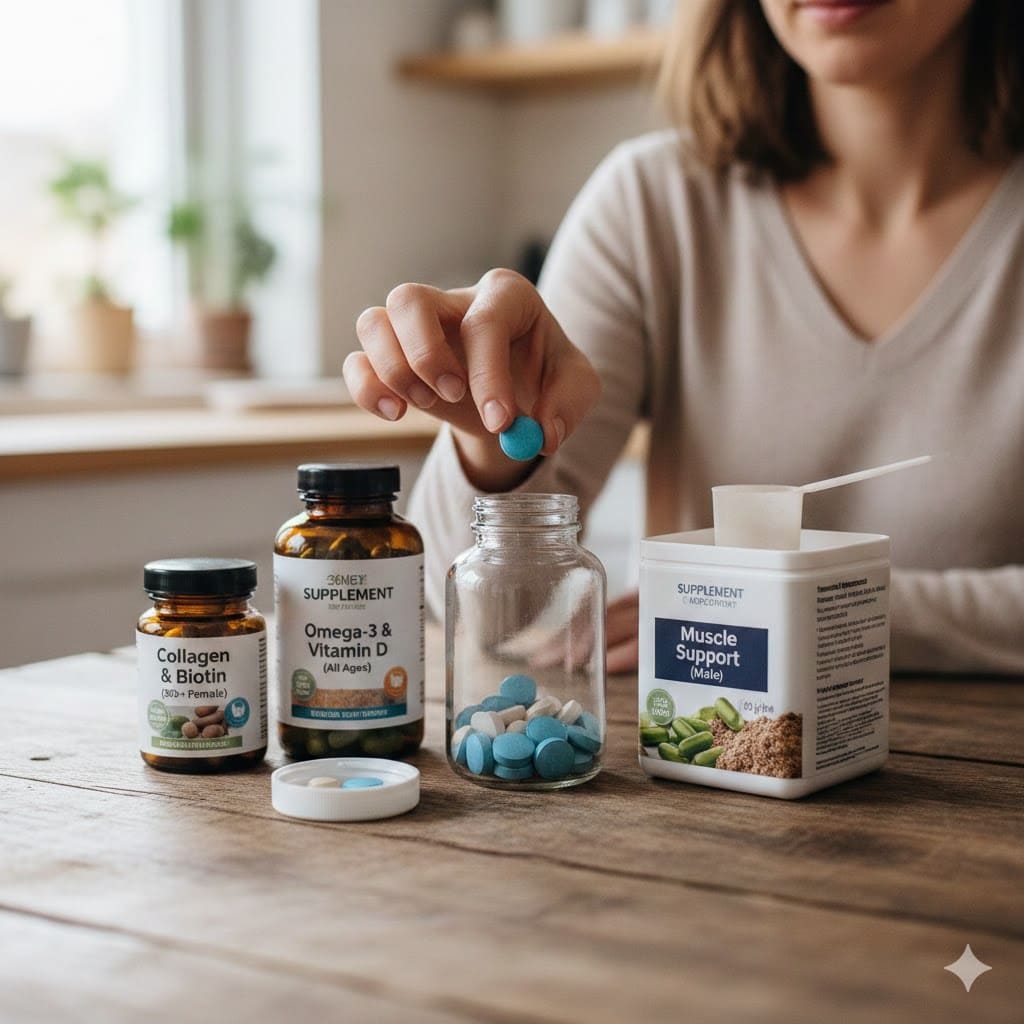
Introduction
Did you know that nearly 75% of adults take dietary supplements — yet most aren’t sure if they’re taking the right ones? That stat stopped me in my tracks the first time I read it. Because honestly… I’ve been that person.
I used to grab whatever multivitamin was on sale and call it “health optimization.” It felt productive. Responsible. Like I was doing something good for my body.
But here’s the truth: your nutritional needs shift dramatically depending on your age and gender.
What works beautifully for a 25-year-old woman won’t necessarily support a 55-year-old man. Hormones change. Metabolism slows. Bone density shifts. Energy levels fluctuate. And suddenly, the supplements that once felt helpful don’t quite cut it anymore.
Choosing the right supplements by age and gender isn’t about chasing trends. It’s about understanding how your body evolves over time.
In this dietary supplements guide, I’m going to walk you through life stage nutrition — for both men and women — so you can build a supplement routine that actually makes sense.
Let’s simplify it.
Why Supplements by Age and Gender Matter
I didn’t always understand micronutrient needs by age. I assumed nutrients were nutrients. Vitamin C is vitamin C, right?
Well… yes. But also no.
How Nutrient Needs Change Across Life Stages
In your 20s, your body is usually efficient. You absorb nutrients well. Hormones are steady. Bone mass is still building.
Fast forward to your 40s or 50s and things change quietly. Nutrient absorption declines. Muscle mass drops. Bone turnover increases. Energy production isn’t quite as smooth.
That’s why multivitamins by age matter.
A young adult may need iron support or folic acid for women. Someone older may need B12 for energy because stomach acid production declines and B12 absorption becomes less efficient.
Your biology evolves. Your supplements should too.
The Role of Hormones in Vitamin and Mineral Requirements
Hormones are powerful. Estrogen, progesterone, and testosterone influence everything from bone health supplements to heart health vitamins.
When estrogen drops during menopause, bone density becomes a major concern. That’s why calcium supplements for seniors and vitamin K2 become more relevant later in life.
For men, testosterone shifts can affect muscle mass and metabolism. That’s where testosterone support supplements, zinc, and vitamin D often enter the picture.
Hormonal health supplements aren’t trendy. They’re strategic.
Differences in Male vs. Female Metabolism
Women generally have lower iron stores. Men typically have more muscle mass. Women experience menopause; men deal more frequently with prostate changes later in life.
So gender-specific supplements exist for a reason.
Iron supplements for women are common because menstruation increases iron loss. Meanwhile, prostate health supplements become more relevant for men over 50.
Biology isn’t identical. So supplementation shouldn’t be either.
Common Nutritional Deficiencies by Age
Here are a few I see again and again:
* Vitamin D deficiency across all age groups
* Magnesium depletion due to stress
* B12 deficiency in older adults
* Calcium insufficiency in postmenopausal women
* Omega-3 deficiency in most modern diets
Most people assume they’re “fine.” I did too. Then a simple blood test told a different story.
Why One-Size-Fits-All Multivitamins Fall Short
One-size-fits-all multivitamins often include minimal doses. Or they skip key nutrients for certain age groups.
A 22-year-old athlete and a 65-year-old retiree shouldn’t rely on the same senior multivitamins or generic blends.
Personalized nutrition matters. Not in a complicated way. Just in an aware way.
Best Supplements for Women by Age
Women’s health supplements shift significantly across decades. I’ve watched friends navigate this — and learned from my own missteps too.
Supplements for Women in Their 20s and 30s
This stage is often about building foundations.
Iron for Menstruation Support
Iron supplements for women are common during reproductive years. Monthly blood loss can lower iron levels, leading to fatigue.
If you feel tired despite sleeping well, iron might be worth checking. But test first — too much iron isn’t helpful either.
Folic Acid for Reproductive Health
Folic acid for women supports cell division and is critical during pregnancy.
Even if pregnancy isn’t on your radar, folate supports DNA synthesis and overall cellular health. Prenatal vitamins often contain higher folate for this reason.
Vitamin D for Immune and Bone Health
Vitamin D deficiency is widespread. I was shocked when mine came back low despite spending time outdoors.
Vitamin D supports immune support supplements, mood balance, and calcium absorption.
Magnesium for Stress and Sleep
Magnesium benefits are underrated.
Stress burns through magnesium quickly. It supports muscle relaxation, sleep quality, and nervous system balance.
Honestly, adding magnesium changed my sleep in a noticeable way.
Omega-3 Fatty Acids
Omega-3 benefits include heart health, brain support, and inflammation balance.
Most diets are low in EPA and DHA. A high-quality fish oil or algae-based omega-3 can fill that gap.
Supplements for Women in Their 40s
Your 40s can feel like a transition decade.
Energy shifts. Hormones fluctuate. Stress often peaks.
Calcium for Bone Density
Bone loss can accelerate during perimenopause.
Calcium, paired with vitamin D3 and vitamin K2, supports bone health supplements that preserve density.
B-Complex Vitamins for Energy
B12 for energy becomes increasingly important.
B vitamins support metabolism and red blood cell production. If you feel more sluggish than usual, B-complex vitamins may help.
Adaptogens for Stress
Adaptogens for stress like ashwagandha or rhodiola can support adrenal balance.
I was skeptical at first. Then I tried one during a particularly overwhelming season, and my stress resilience improved noticeably.
Collagen for Skin and Joints
Collagen supplements support skin elasticity and joint health supplements.
In your 40s, collagen production declines. Supplementation can support connective tissue and overall healthy aging supplements.
Supplements for Women 50+
This stage often focuses on menopause supplements and longevity.
Calcium and Vitamin K2
Postmenopausal supplements often include calcium, vitamin D, and K2 to support bone strength.
Estrogen decline affects bone turnover. Supporting bone health supplements becomes essential.
Vitamin B12
B12 absorption decreases with age.
Low B12 can affect nerve function, memory, and energy. It’s small, but powerful.
Omega-3s for Cardiovascular Support
Heart health vitamins become more important as cardiovascular risk increases.
Omega-3s help maintain healthy triglyceride levels and support overall heart function.
Probiotics for Gut Health
Gut health probiotics support immune system balance and digestion.
The gut microbiome changes with age. Supporting it can improve nutrient absorption and immune resilience.
Phytoestrogens for Menopause
Phytoestrogens from soy or flax may help ease hot flashes and support hormonal health supplements naturally.
They aren’t magic. But they can be part of a supportive plan.
Also read: Best Postpartum Supplements for Recovery and Energy
Best Supplements for Men by Age
Men’s health supplements also evolve with time.
Supplements for Men in Their 20s and 30s
This stage is often about performance and prevention.
Protein for Muscle Maintenance
Protein supplements help meet daily intake for muscle recovery and metabolism.
Even active men sometimes underestimate their protein needs.
Zinc for Testosterone Support
Zinc supports immune health and testosterone support supplements.
Low zinc levels can affect hormonal balance.
Vitamin D
Vitamin D supports hormone regulation and immune support supplements.
It’s foundational. Not flashy. But essential.
Magnesium for Recovery
Magnesium supports muscle recovery and reduces cramping.
After workouts, it helps the body relax instead of staying wired.
Omega-3s
Again, omega-3 benefits apply here too — especially for cardiovascular health.
Supplements for Men in Their 40s
This is often when heart and prostate health enter the conversation.
CoQ10 for Heart Health
CoQ10 benefits include supporting mitochondrial energy and cardiovascular function.
It’s especially useful for those concerned about heart health vitamins.
Vitamin B12
Energy production shifts with age.
B12 helps maintain nerve function and red blood cell formation.
Saw Palmetto for Prostate Support
Prostate health supplements often include saw palmetto.
It may help support urinary function as men age.
Fiber Supplements
Fiber supplements support digestive health and cholesterol balance.
Many men don’t get enough fiber through diet alone.
Antioxidants
Antioxidant supplements help reduce oxidative stress.
Free radicals increase with age. Supporting cellular protection matters.
Supplements for Men 50+
Healthy aging supplements become the focus.
Vitamin D and Calcium
Bone health isn’t just a women’s issue.
Men also experience bone density changes. Calcium supplements for seniors can be beneficial here too.
Omega-3 Fatty Acids
Omega-3s support heart function and cognitive health.
They’re part of most supplements for longevity strategies.
Prostate-Support Formulas
Comprehensive prostate health supplements may combine saw palmetto, zinc, and antioxidants.
Turmeric for Inflammation
Turmeric is one of my favorite anti-inflammatory supplements.
Joint stiffness becomes more noticeable with age. Curcumin can help manage inflammation.
Senior Multivitamins
Senior multivitamins tailored to older men often adjust iron levels and emphasize B12 and vitamin D.
Age-specific vitamins matter here.
Key Nutrients Everyone Should Consider
Some nutrients are universally relevant.
Vitamin D
Vitamin D deficiency is common globally.
It supports immune system function, bone strength, and mood balance.
Magnesium
Magnesium benefits include muscle health, stress management, and heart rhythm support.
Many people are borderline deficient.
Omega-3 Fatty Acids
Omega-3 benefits extend to brain function, cardiovascular health, and inflammation regulation.
Few people consume enough fatty fish.
Probiotics
Gut health probiotics influence digestion, immunity, and even mood.
A balanced microbiome supports better vitamin absorption.
Antioxidants
Antioxidant supplements help protect cells from damage.
Think vitamins C, E, and plant compounds.
Electrolyte Support
Electrolyte supplements support hydration, especially for active individuals.
Hydration impacts energy, cognitive clarity, and muscle performance.
Also read about supplements teenagers and kids should take.
How to Choose High-Quality Supplements
This part is critical.
I’ve made the mistake of buying cheap, flashy bottles before. Regret followed.
Look for Third-Party Testing
Third-party tested supplements ensure purity and potency.
Certifications from independent labs matter.
Bioavailability
Bioavailable supplements use forms your body can absorb.
For example, methylcobalamin instead of cyanocobalamin for B12.
Vitamin absorption varies depending on form.
Whole-Food vs Synthetic
Some prefer whole-food blends. Others use synthetic vitamins effectively.
The key is quality and dosage accuracy.
Avoid Fillers
Clean supplement brands avoid unnecessary dyes and additives.
Read the label carefully.
Dosage by Age
More is not better.
Fat-soluble vitamins like A, D, E, and K can accumulate. Over-supplementing can cause harm.
Consult a Healthcare Provider
Especially if you’re on medication.
Some supplements interact with prescriptions. It’s better to double-check.
Common Mistakes When Choosing Supplements
I’ve made a few of these myself.
Over-Supplementing
High doses of fat-soluble vitamins can build up.
Balance matters.
Ignoring Interactions
Calcium can interfere with iron absorption.
Timing matters more than people realize.
Following Trends
Just because something is viral doesn’t mean you need it.
Choose based on needs, not hype.
Not Testing for Deficiencies
Blood work removes guesswork.
It’s practical. Not dramatic.
Assuming More Is Better
Sometimes less is more.
Strategic supplementation beats overloaded cabinets.
Conclusion
Choosing the right supplements by age and gender isn’t complicated — but it does require awareness.
Our bodies evolve. Hormones shift. Nutrient absorption changes. And what supported us ten years ago might not serve us today.
The key is intentional supplementation. Focus on life-stage-specific nutrients. Invest in high-quality, bioavailable supplements. Choose third-party tested supplements from clean supplement brands. And don’t be afraid to ask for professional guidance.
Small, informed adjustments can make a huge difference in energy levels, bone health, heart function, immune resilience, and overall vitality.
Your health isn’t static — and your supplement routine shouldn’t be either.
Start where you are. Assess your nutritional deficiencies by age. Build a daily vitamin guide that supports balanced nutrition support. Think long-term health optimization supplements, not quick fixes.
And if you’ve learned something about your own supplementation journey — share it. I’d love to hear what’s worked for you.
Because honestly? We’re all figuring this out together.