Here’s a number that stopped me in my tracks: according to a study published in the *American Journal of Obstetrics & Gynecology*, only about one-third of the top 50 prenatal vitamins on Amazon actually contain the nutrients at the doses recommended by the American College of Obstetricians and Gynecologists (ACOG). One-third! That means roughly two out of every three prenatals sitting in your shopping cart might not be giving you or your baby what you actually need.
I remember standing in the supplement aisle during my first pregnancy, completely overwhelmed. There were gummies, capsules, softgels, subscription boxes — and every single one claimed to be “the best.” But the truth is, not all prenatal supplements are created equal, and the marketing on the bottle doesn’t always match the science inside it.
So let’s cut through the noise. In this guide, I’m breaking down exactly what to look for in the best prenatal supplements, which nutrients your doctor actually cares about, and how to pick the one that works for your body and your budget. Whether you’re trying to conceive, newly pregnant, or well into your third trimester, this is the resource I wish I’d had from the start.
Why Prenatal Supplements Matter More Than You Think
Okay, let’s start here, because I think a lot of people underestimate just how much your nutritional needs change during pregnancy. Your body is literally building a human being from scratch. It needs more of almost everything — more folate, more iron, more calcium, more vitamin D. The demands are real, and they start earlier than most people realize.
Here’s the thing: even women who eat really well often fall short. National survey data shows that pregnant women in the U.S. frequently don’t get enough iron, vitamin D, folate, or calcium through diet alone. I thought I ate pretty healthy, and I was still deficient in vitamin D when my midwife tested me. It happens to the best of us.
There’s also something worth knowing about how these products are regulated. The FDA classifies prenatal vitamins as dietary supplements — which means they don’t go through the same approval process as prescription drugs before hitting store shelves. Quality can vary wildly between brands, and there’s no government body checking that the nutrients listed on the label are actually in the bottle at the right dose. That’s a little unsettling, honestly.
One of the most important timing points I want to make: start your prenatal *before* you’re pregnant if at all possible. Neural tube development — the process that forms your baby’s brain and spinal cord — begins within the first 28 days after conception. That’s often before you’ve even missed a period, let alone gotten a positive test. A prenatal vitamin is your nutritional safety net, but it works best when you’ve been building those stores ahead of time.
That said, prenatals aren’t a substitute for a healthy diet. Think of them as backup — there to fill the gaps when your diet falls short, not to replace the whole foundation.
The Must-Have Nutrients in Any Quality Prenatal Vitamin
If you only take one thing away from this article, let it be this: not all prenatal vitamins are created equal, and the nutrient profile matters enormously. Here’s what I look for — and what your OB-GYN or midwife likely looks for too.
Folate (400–800 mcg) is the most critical nutrient for preventing neural tube defects. You’ll see it listed as either folic acid or methylfolate (5-MTHF) on labels — we’ll get into the difference in a later section, but both forms count. Make sure your prenatal has at least 400 mcg, ideally closer to 600–800 mcg if you’re already pregnant.
Iron (27 mg) is necessary because your blood volume increases by about 50% during pregnancy. That’s a dramatic change, and your body needs iron to keep up. Iron deficiency anemia is one of the most common pregnancy complications, so don’t skip this one. Look for chelated forms like iron bisglycinate — they’re gentler on the stomach, which matters because iron is often what causes prenatal nausea and constipation.
DHA Omega-3 (at least 200–300 mg) is critical for your baby’s brain and eye development, especially in the third trimester. Here’s what surprised me the first time I went prenatal shopping: not all prenatal vitamins include DHA. If yours doesn’t, you’ll need a separate fish oil or algae-based omega-3 supplement.
Choline (450 mg) is the nutrient I had never even heard of before my second pregnancy — and it turns out it’s one of the most important ones. It supports fetal brain development, spinal cord formation, and placental function. Most prenatal vitamins barely include any. More on that in a minute.
Calcium (1,000 mg daily) builds your baby’s bones and teeth, but most prenatals don’t contain the full amount because it would make the pill too large. You’ll often need to make up the difference through diet or a separate supplement.
Vitamin D (at least 600 IU, often more) supports calcium absorption and immune function. Deficiency is common across all populations — it was the first thing my midwife flagged when she reviewed my labs. Many experts now recommend 1,000–2,000 IU during pregnancy, though you should discuss dosing with your provider.
Iodine (220 mcg) supports your thyroid, which is hugely important for your baby’s brain development. This one is often overlooked but matters a lot, especially if you don’t use iodized salt or eat much seafood.
Vitamin B6, B12, and other B vitamins round out a solid prenatal formula. B6 specifically has some evidence behind it for reducing pregnancy nausea, which is a nice bonus. B12 supports red blood cell formation and DNA synthesis.
How to Choose the Best Prenatal Supplement for You
I’ve made the mistake of just grabbing whatever was on sale. Don’t do that. There are a few non-negotiables I’d recommend looking for on every prenatal label.
First: third-party testing certifications. Look for a USP Verified seal, NSF International certification, or IFOS certification for fish oil. These seals mean an independent lab has confirmed the product contains what the label says, at the stated doses, without harmful contaminants. This is your best quality guarantee when the FDA isn’t doing that work for you.
Second: check the form of folate. I’ll say more about this later, but if you have or suspect an MTHFR gene variation (which affects 30–60% of people), methylfolate is the safer choice. Folic acid requires conversion by your body to be usable, and some people don’t do that conversion efficiently.
Third: think about your format. Gummies are easier to swallow and can help with morning sickness, but they typically contain little to no iron and often miss other key minerals. Capsules and softgels tend to give you a more complete nutrient profile. I actually switched from gummies to capsules midway through my first pregnancy when I realized my gummies had zero iron in them. Lesson learned.
Also consider your specific needs. Do you eat fish regularly? If so, you might be getting enough DHA. Do you have a history of anemia? Then iron becomes a priority. Are you vegetarian or vegan? Look for algae-based DHA and a B12 source.
One red flag to watch for: excess preformed vitamin A (listed as retinol on labels). Too much retinol during pregnancy has been linked to birth defects. Beta-carotene is a safer form — your body converts it to vitamin A only as needed. And here’s something that might surprise you: price doesn’t guarantee quality. Studies have found no meaningful link between a prenatal vitamin’s cost and whether it meets ACOG recommendations. A $12 drugstore prenatal with a USP seal can outperform a $60 boutique brand.
Best Prenatal Supplements Worth Considering in 2026
I want to be upfront: I’m not saying these are the only good options, and what works best is going to vary based on your individual health needs. Always loop in your OB-GYN or midwife. That said, here are some of the most well-regarded prenatal supplements heading into 2026.
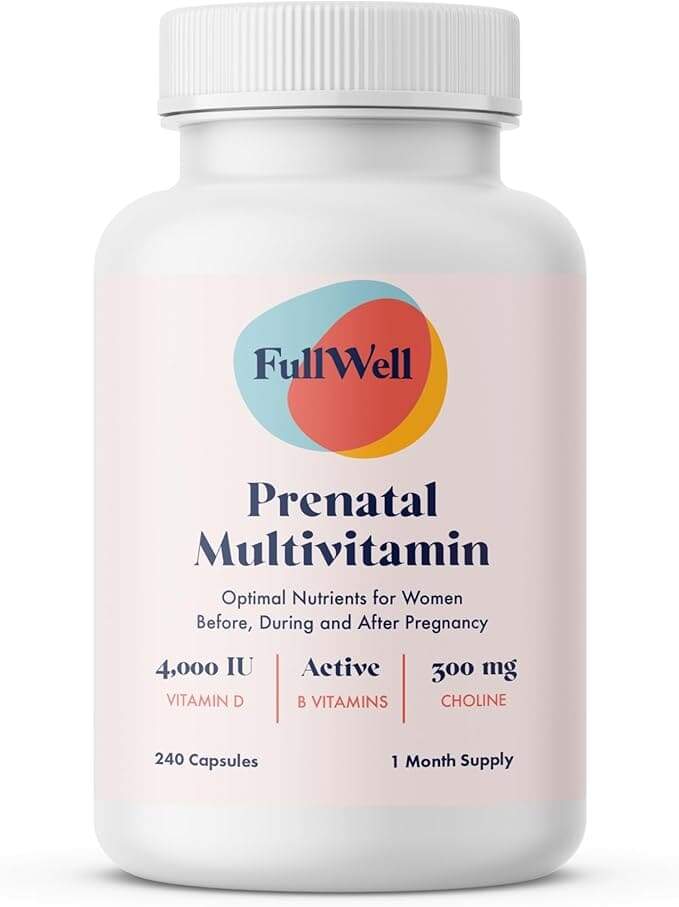
FullWell Prenatal Multivitamin stands out for its comprehensive nutrient profile, designed by a fertility dietitian. It has standout levels of choline, vitamin D, and magnesium — three nutrients that most prenatals underdeliver. It’s iron-free by design, which lets you customize your iron supplementation separately. It’s on the pricier side, but the formula is hard to beat for thoroughness.
Things we liked
- Exceptional choline, vitamin D, and magnesium levels
- Designed by a fertility dietitian with bioavailable nutrient forms
- Iron-free formula allows flexible, customized iron dosing
Things we didn’t like
- One of the priciest options on the market
- Requires a separate iron supplement for most women
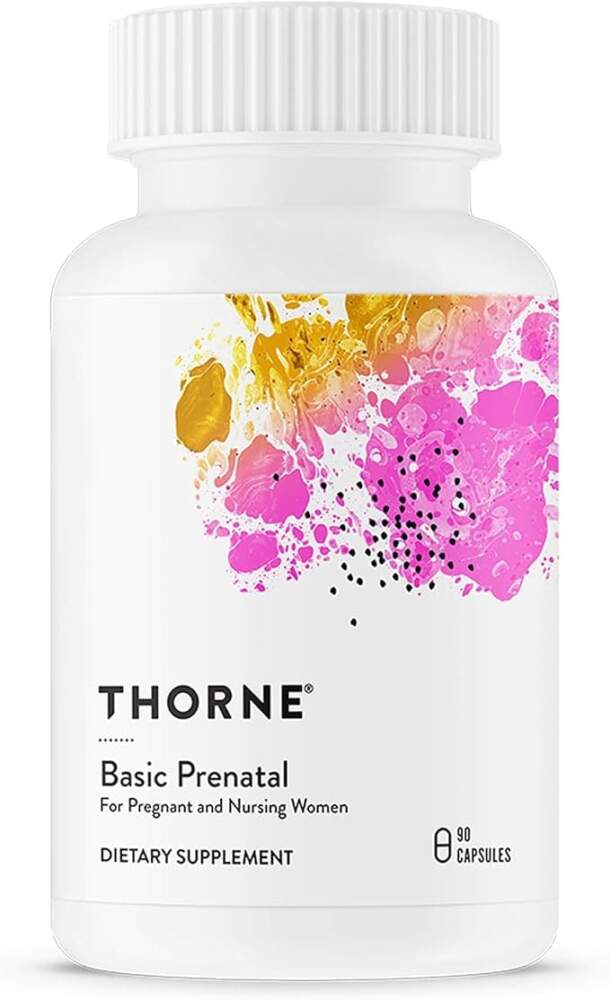
Thorne Basic Prenatal is my go-to recommendation for people who want solid quality without the premium price tag. It’s made in an NSF-certified facility, includes iron, and uses methylfolate. Not fancy, but it does the job well. I’ve recommended it to several friends and they’ve all been happy with it.
Things we liked
- NSF-certified facility ensures quality and purity
- Solid, complete nutrient profile at an accessible price
- Uses methylfolate for better bioavailability
Things we didn’t like
- Lower choline content than ideal
- Capsule count may feel like a lot to take daily
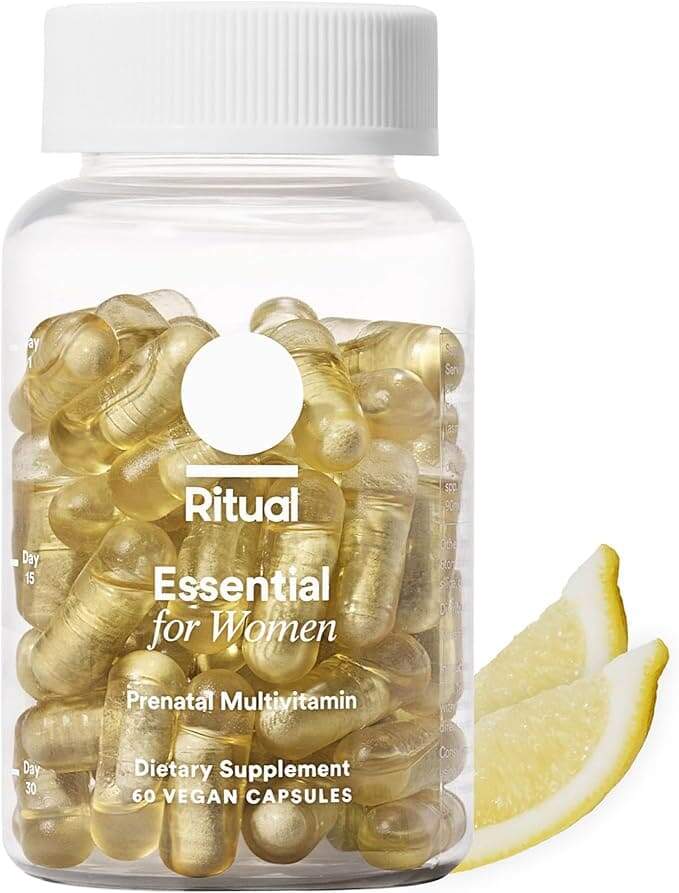
Ritual Essential Prenatal has gotten a lot of attention for good reason. It uses a delayed-release capsule design that’s been shown to reduce nausea (especially on an empty stomach), includes DHA from algae, uses methylfolate, and is vegan-friendly. It’s backed by a clinical study — one of the few prenatals that can say that. It’s missing some nutrients like choline at meaningful doses, so keep that in mind.
Things we liked
- Delayed-release capsule reduces nausea significantly
- Vegan-friendly with algae-based DHA
- Backed by a published clinical study
Things we didn’t like
- Choline content is minimal
- Does not include iron, requiring a separate supplement
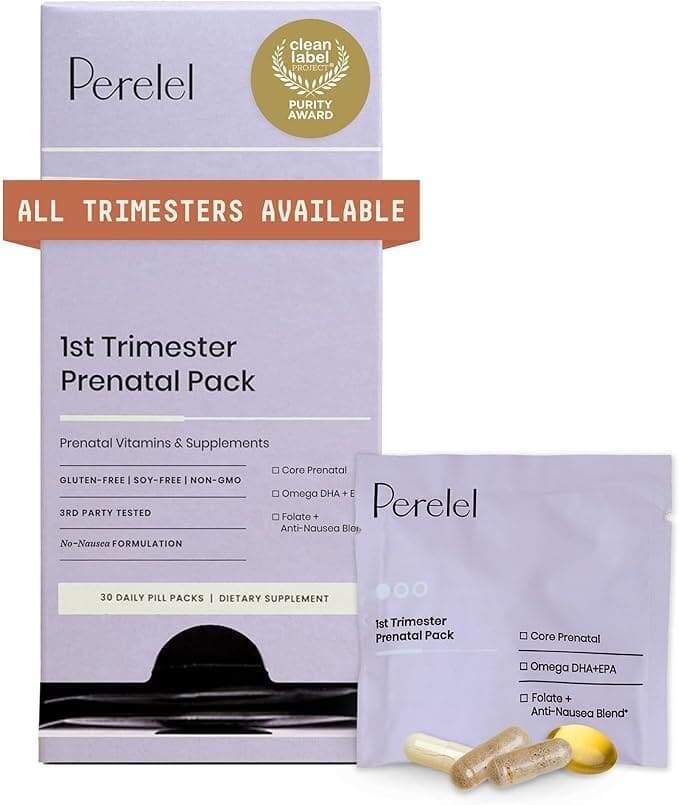
Perelel Prenatal Packs are co-founded by OB-GYNs and take a trimester-specific approach — different nutrient levels for each stage of pregnancy. The inclusion of B6 and ginger specifically for the first trimester is a smart touch for anyone dealing with morning sickness. More expensive, but there’s real thought behind the formula.
Things we liked
- Trimester-specific formulas adjust nutrients as pregnancy progresses
- Includes B6 and ginger to help manage first-trimester nausea
- Co-founded and formulated by OB-GYNs
Things we didn’t like
- Significantly more expensive than most competitors
- Multiple daily packets can feel cumbersome
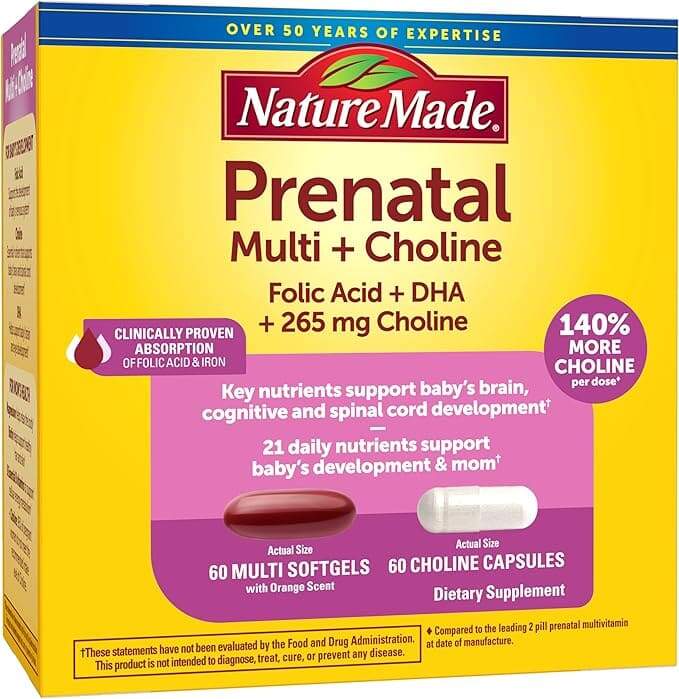
Nature Made Prenatal Multi + Choline is my top drugstore pick. It’s USP verified, includes DHA, and has 265 mg of choline — more than most other accessible options. Widely available, affordable, and trustworthy. If budget is a concern, start here.
Things we liked
- USP verified for quality and accuracy
- Includes 265 mg choline, more than most drugstore options
- Widely available and very affordable
Things we didn’t like
- Uses folic acid rather than methylfolate
- DHA dose is on the lower end at 200 mg
Needed Prenatal offers one of the most comprehensive formulas on the market and allows you to add individual nutrients as needed. It emphasizes bioavailable forms throughout and is well-regarded in the nutrition community. A good option if you want maximum customizability.
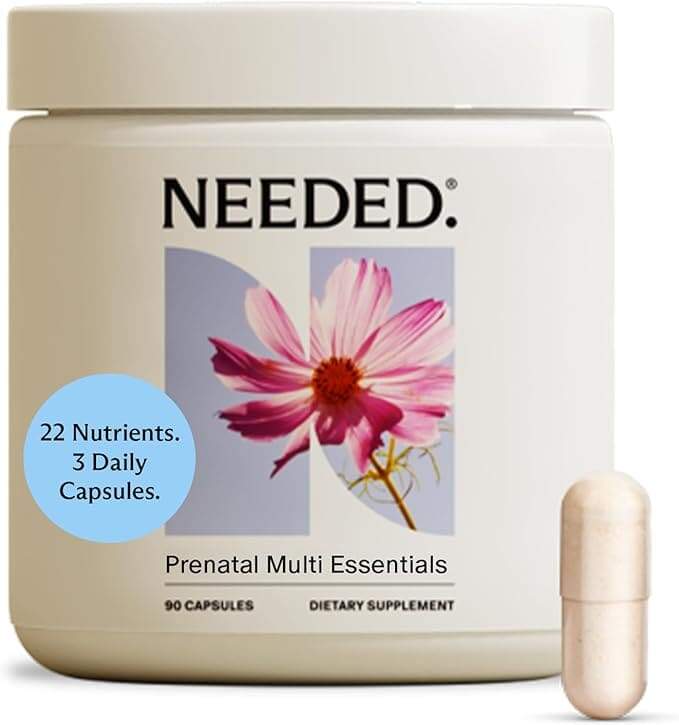
Things we liked
- One of the most comprehensive formulas available
- Uses bioavailable forms throughout
- Highly customizable with add-on individual nutrients
Things we didn’t like
- Premium price point
- Large number of capsules required per serving
Again – please talk to your provider before committing to any specific prenatal. The best prenatal vitamin for your neighbor might not be the best one for you.
Folic Acid vs. Methylfolate: Which Form Should Your Prenatal Have?
This is one of those topics that sounds complicated but is actually pretty straightforward once someone explains it clearly. Let me try to do that.
Folic acid is a synthetic form of vitamin B9. Your body has to convert it into its active, usable form through a series of enzymatic steps. For most people, this works fine. The CDC and ACOG both recognize folic acid as effective for preventing neural tube defects, and the research supporting it spans decades.
Methylfolate (also called 5-MTHF) is the biologically active form — the version your cells can use directly, no conversion required. It’s what your body is actually trying to make when it processes folic acid.
Here’s where it gets interesting: an estimated 30–60% of people carry a variation in the MTHFR gene that reduces the efficiency of that folic-acid-to-methylfolate conversion. People with this variation may not be absorbing as much folate as they think, even if they’re taking a prenatal that lists folic acid on the label.
If you know you have an MTHFR variant, methylfolate is the better choice — no question. If you don’t know (and most people don’t), methylfolate is still a safe and smart option because it works for everyone. Folic acid isn’t dangerous or ineffective for the majority of women — it’s just not as universally reliable as methylfolate. Newer prenatal brands tend to lean toward methylfolate for this reason.
My practical advice: if you can find a quality prenatal with methylfolate at a similar price point to one using folic acid, go with the methylfolate. If not, don’t panic — folic acid at the right dose still protects most pregnancies.
Why Choline Is the Most Overlooked Prenatal Nutrient
Okay, this one genuinely surprised me when I first learned about it. Choline is essential for fetal brain development, spinal cord formation, and healthy placental function. It works alongside folate in reducing the risk of neural tube defects. It’s also involved in preventing certain pregnancy complications. It’s a big deal.
The recommended daily intake during pregnancy is 450 mg. Most women get nowhere near that through diet alone. And here’s the really eye-opening part: a published study found that zero out of 48 commercial prenatal vitamins provided the full ACOG-recommended amount of choline. Not one. Zero!
The best dietary sources of choline are eggs (especially the yolk), beef, chicken liver, and soy. If you eat eggs regularly, you’re doing better than most. But even then, you’re probably not hitting 450 mg consistently.
When shopping for a prenatal, look for one that includes at least 200–300 mg of choline. FullWell and Nature Made Prenatal + Choline are among the better options here. If your prenatal doesn’t include meaningful choline, consider adding a standalone choline supplement — something like choline bitartrate or CDP-choline. Talk to your provider about the right dose for you.
I genuinely think choline awareness is one of the most important prenatal nutrition shifts happening right now. It’s been under the radar for too long.
When Should You Start Taking a Prenatal Vitamin?
The honest answer: earlier than you probably think. Ideally, start taking a prenatal 3–4 months before you’re actively trying to conceive. Here’s why that matters more than most people realize.
It takes roughly 90–120 days for an egg to fully mature. The nutritional environment during that window directly affects egg quality. Starting your prenatal well before conception gives your body time to build stores of iron, folate, and other nutrients before they’re urgently needed.
The timing around folate is especially critical. Neural tube formation begins within the first 28 days after conception — often before you’ve missed a period or taken a pregnancy test. If you wait until you get a positive test to start your prenatal, the window for folate’s most important work may already have passed.
That said — if you’ve just found out you’re pregnant and haven’t been taking a prenatal, please don’t panic. Start taking one immediately. It is absolutely not too late. Your baby is still developing and will benefit from proper nutrition throughout the entire pregnancy.
Plan to continue taking your prenatal through the full postpartum and breastfeeding period too. Your nutrient demands stay elevated during breastfeeding, and your body needs support as it recovers from birth.
One more thing: even if you’re not actively trying to conceive, ACOG recommends that all women of childbearing age take a daily supplement with at least 400 mcg of folic acid. Because pregnancies aren’t always planned, and that neural tube timeline waits for no one.
Common Side Effects of Prenatal Vitamins and How to Deal With Them
Real talk: prenatal vitamins can make you feel pretty awful, especially in the first trimester. I definitely had some rough mornings. Here’s what I’ve learned about managing the most common side effects.
Nausea is usually the biggest complaint, and it’s often caused by iron. One of the easiest things you can try is taking your prenatal with a full meal, or switching to bedtime dosing. Some women find that taking it before sleep means they sleep through the worst of the queasiness. Prenatals that contain ginger (like Perelel’s first-trimester formula) can also help.
Constipation is another iron-related issue, and it can be really uncomfortable. Increase your water and fiber intake, and consider switching to a prenatal that uses chelated iron (bisglycinate). This form is gentler on the digestive system and just as effective. I made this switch and it made a big difference.
Fishy burps or aftertaste are common with DHA-containing supplements, especially fish oil-based ones. Look for brands that use delayed-release capsules or enteric-coated softgels — they release the DHA further down in your digestive tract where it doesn’t come back up. Ritual’s design addresses this specifically, which is part of why it’s popular.
If you’re struggling to keep pills down at all, try splitting your dose between morning and evening, or experiment with different formats. Some women do better with liquid prenatals or smaller capsules. There’s no shame in switching — the best prenatal vitamin is the one you can actually take consistently.
If your side effects are severe or persistent, talk to your OB-GYN. There are prescription prenatals with different formulations that might work better for you.
Prenatal Gummies vs. Capsules: Which Is Better?
I get this question a lot, and the short answer is: it depends on your priorities, but capsules usually win on completeness.
Gummies have a real advantage — they’re easier to take, they taste better, and for someone who struggles to swallow pills or is dealing with severe morning sickness, they can mean the difference between taking a prenatal and not taking one. Compliance matters. A gummy you actually take beats a perfect capsule you keep forgetting or avoiding.
But here’s the trade-off: gummies typically contain no iron, and often fall short on other minerals that simply can’t fit into a gummy format in meaningful doses. If you’re taking a gummy prenatal, you’ll almost certainly need a separate iron supplement — and figuring out the right dose of iron on your own can be tricky without guidance.
Capsules and tablets, while less exciting, generally give you a more complete and accurately dosed nutrient profile. Softgels are often easier to swallow than hard tablets and can include DHA directly.
My recommendation: if you can handle capsules or softgels, they’re the more reliable choice. If gummies are what makes you consistent, go with gummies — and talk to your provider about supplementing iron and any other missing nutrients separately. The best prenatal format is genuinely the one you’ll take every single day without fail.
Red Flags to Watch for When Shopping for Prenatal Supplements
The supplement aisle — and Instagram — is full of products that look great but don’t deliver. Here’s what I’ve learned to watch out for.
No third-party testing seal is a big one. If there’s no USP, NSF, or comparable certification on the label, there’s no independent verification that the product contains what it claims. That’s a problem, given how loosely the supplement industry is regulated.
Missing key nutrients is another warning sign. A prenatal that doesn’t include folate, iron, and DHA (or at least flag that DHA needs to be supplemented separately) isn’t meeting the basics. Very low choline — or no choline at all — is also a red flag given what we now know about its importance.
Watch for excessive preformed vitamin A (retinol). Too much can be teratogenic — meaning it can cause birth defects. Beta-carotene is the safe form. If your prenatal’s vitamin A comes entirely from retinol, I’d look for another option.
Proprietary blends that don’t disclose individual ingredient amounts are a marketing trick that should make you suspicious. You deserve to know exactly what’s in your supplement and at what dose.
Social media hype is not a substitute for clinical evidence. Some of the most aggressively marketed prenatal brands I’ve seen have mediocre formulas. Cross-check any recommendation against ACOG guidelines, third-party review resources, and ideally your healthcare provider’s input.
Conclusion
Choosing the best prenatal supplement doesn’t have to feel like a research project — even though it kind of is. The most important thing? Start with the basics. Make sure your prenatal has adequate folate (ideally methylfolate), iron, DHA, and choline. Look for a third-party testing seal. And don’t assume the most expensive or most Instagram-famous option is automatically the best one.
I’ll be honest: the supplement aisle used to completely overwhelm me. But once you know what to look for, it gets so much easier. You stop being dazzled by pretty packaging and start reading the actual label. That’s a skill worth having, especially when something this important is on the line.
Talk to your OB-GYN or midwife about what makes sense for your body, your diet, and your specific pregnancy. Because at the end of the day, the best prenatal vitamin is the one that gives you and your baby what you actually need — and the one you’ll take every single day.
You’ve got this, mama.
FAQ
There is no single best prenatal supplement for everyone, but doctors generally recommend looking for one that contains methylfolate (400–800 mcg), iron (27 mg), DHA (at least 200–300 mg), choline (at least 200 mg), vitamin D, iodine, and B vitamins. Brands like Thorne Basic Prenatal, FullWell, Ritual Essential Prenatal, and Nature Made Prenatal Multi + Choline are frequently recommended because they use bioavailable nutrient forms and carry third-party testing certifications. Always consult your OB-GYN or midwife to find the best fit for your individual health needs.
Ideally, you should start taking a prenatal vitamin 3 to 4 months before trying to conceive. Neural tube development begins within the first 28 days after conception, often before you even know you are pregnant, so having adequate folate in your system early is critical. If you just found out you are pregnant and have not been taking one, start immediately — it is never too late to begin supporting your baby’s development.
Folic acid is a synthetic form of vitamin B9 that your body must convert into its active, usable form. Methylfolate (5-MTHF) is already in its active form, meaning your body can use it directly without any conversion. An estimated 30 to 60 percent of people carry an MTHFR gene variation that reduces the body’s ability to convert folic acid efficiently. For this reason, many experts prefer methylfolate as a safer and more universally effective option, though folic acid is still recognized by the CDC and ACOG as effective for most women.
Most do not. The recommended daily intake of choline during pregnancy is 450 mg, yet a published study found that none of the 48 commercial prenatal vitamins reviewed provided the full ACOG-recommended amount. Choline is essential for fetal brain development, spinal cord formation, and placental function. Look for a prenatal that includes at least 200 to 300 mg of choline, or consider adding a standalone choline supplement. Foods like eggs, beef, and chicken are also good dietary sources.
Generally, no. Prenatal gummies are easier to take and can improve consistency for women who struggle with nausea or swallowing pills, but they typically contain little to no iron and often fall short on other key minerals. Capsules and softgels tend to provide a more complete and accurately dosed nutrient profile. If you prefer gummies, plan to supplement iron separately and discuss the right dose with your healthcare provider.
Iron is the most common culprit behind both nausea and constipation in prenatal vitamins. Taking your prenatal with food or switching to bedtime dosing can help reduce nausea. For constipation, increasing water and fiber intake usually helps, and switching to a prenatal that uses chelated iron (such as iron bisglycinate) is gentler on the digestive system. If symptoms are severe, talk to your provider about prescription prenatal options or alternative formulations.
Not all prenatal vitamins include DHA, and those that do do not always provide the recommended 200 to 300 mg. DHA is critical for fetal brain and eye development, particularly in the third trimester. Check your prenatal label carefully, and if DHA is missing or underdosed, add a separate fish oil or algae-based omega-3 supplement. Algae-based DHA is a good option for vegetarians and vegans.
Look for third-party testing certifications such as USP Verified, NSF International, or IFOS for fish oil. These seals confirm that an independent lab has verified the product contains what the label claims at the stated doses and without harmful contaminants. Avoid supplements that use proprietary blends without disclosing individual ingredient amounts, contain excessive preformed vitamin A (retinol), or make dramatic health claims not backed by clinical evidence.
Yes. Your nutritional demands remain elevated during the postpartum period and throughout breastfeeding. Continuing your prenatal vitamin after birth helps support milk production, replenish nutrient stores depleted during pregnancy, and support your own recovery. Many healthcare providers recommend staying on a prenatal or postnatal vitamin for the full duration of breastfeeding.
Yes, and it is actually encouraged. ACOG recommends that all women of childbearing age take a daily supplement containing at least 400 mcg of folic acid, even if they are not actively trying to conceive. Since nearly half of pregnancies in the U.S. are unplanned, having adequate folate in your system before conception is one of the most effective ways to reduce the risk of neural tube defects from day one.